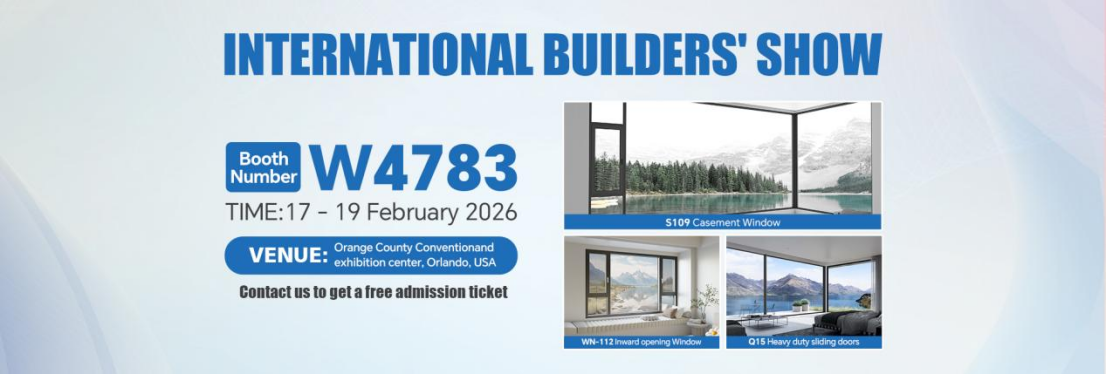
American Builder's Guide: Exploring DERCHI's Aluminum Window Longevity and Cost at Booth W4783, Orlando
FOSHAN, GUANGDONG, CHINA, June 17, 2026 /EINPresswire.com/ -- When sourcing windows for large-scale residential or commercial builds across the United States, the supplier choice carries real consequences — on project timelines, code compliance, long-term performance, and overall budget. At a recent industry expo in Orlando, Florida, one exhibitor drew consistent attention from architects, general contractors, and procurement leads: DERCHI Doors and Windows. Positioned at Booth W4783, the Guangdong-based manufacturer made a clear case for why it belongs among the Top 10 Suppliers of Aluminum Window globally — and why that ranking matters specifically to American builders navigating a demanding regulatory and climate landscape.
What DERCHI Showcased at Booth W4783
Orlando was a deliberate venue choice. Florida is one of the most stringent building code environments in the country, where fenestration products face strict scrutiny for wind resistance, thermal performance, and water infiltration. By exhibiting here, DERCHI signaled its readiness for the North American market's toughest requirements — not just its most accessible ones.
The booth centered on DERCHI's aluminum window lineup, including its Casement Windows, Picture Windows, and Sliding Windows. Visitors could examine full-scale samples, review specification sheets, and discuss custom sizing and configuration options directly with technical staff. For builders managing villa developments, multi-unit residential communities, or mixed-use projects, the ability to evaluate a complete window system — frames, glazing, hardware, and sealing — in a single conversation proved a practical draw.
DERCHI holds certification from Xinhua News Agency as a "China Famous Brand" and operates a production base of 180,000 m² with an annual output exceeding 1,000,000 m². This scale is relevant to North American buyers because it directly addresses a common pain point: the gap between sample quality and production-at-scale consistency.
Hurricane-Impact Windows: Why U.S. Certification Standards Matter
For any builder operating in Florida, the Gulf Coast, or the broader Southeast, sourcing hurricane-impact windows is not a specification preference — it is a legal prerequisite. Understanding the U.S. hurricane certification framework is essential before any procurement decision, and it's a topic that dominated conversations at the Orlando booth.
The most rigorous standard in this space is the Miami-Dade Notice of Acceptance (NOA) — widely regarded as the most demanding hurricane safety certification in the United States. It is mandatory for windows installed in Florida's High-Velocity Hurricane Zones (HVHZ), requiring products to withstand extreme wind pressure and debris impact without failure. A window carrying Miami-Dade NOA approval has passed the toughest publicly enforced wind-load and impact-resistance protocol in the country — which is precisely why it functions as a credibility benchmark well beyond Florida's borders.
Closely related is the Florida Product Approval (FPA), which covers the broader state of Florida. Products that clear FPA can be legally sold and installed statewide, and the approval process requires demonstrated compliance with Florida Building Code performance thresholds. Together, Miami-Dade NOA and FPA represent the two gating requirements that define whether a window product is viable for storm-zone construction in the Southeast.
Underpinning both is ASTM E1886/E1996 — the standardized test methodology used to evaluate how building envelope components perform under windborne debris impact. These tests simulate large and small missile strikes against the window assembly, and results feed directly into NOA and FPA approval processes.
DERCHI's aluminium windows are engineered with these standards in mind. The company's Glass Self-Adaptive Adjustment System patent is specifically designed to distribute structural stress across the glazing assembly under high-load conditions — directly addressing the failure modes that ASTM missile impact tests are designed to expose. Combined with the Exclusive Four-Side Six-Point Lock invention patent (Patent No. ZL201610053534.X) and an NFRC-certified performance profile covering thermal, solar, and air infiltration metrics, DERCHI's product engineering maps closely to what U.S. compliance workflows require.
For project managers, the practical benefit is straightforward: hurricane-impact windows from a supplier whose product architecture reflects U.S. certification requirements move through permit and inspection stages with significantly less friction than uncertified alternatives. On large-scale residential or mixed-use developments, that difference in schedule velocity compounds quickly.
Aluminum Window Longevity: How DERCHI Backs Its Claims
The longevity question is one that every builder eventually faces from clients: how long will these windows actually last, and what happens when something goes wrong?
DERCHI's manufacturing process provides a measurable answer. Each product undergoes 168 distinct production processes and 38 rigorous inspection checkpoints before leaving the factory. The company has independently developed over 100 patents, reflecting sustained investment in both product innovation and manufacturing precision. An intelligent manufacturing system with 360-degree quality control monitors output at scale, which matters when a single project might require hundreds of identical units.
The company offers a ten-year warranty backed by double insurance coverage — a commitment that signals confidence in the durability of its materials and joinery. DERCHI's aluminum windows also carry the Three-Star Green Building Material certification, the highest tier in that classification, which reflects performance in both energy efficiency and environmental standards.
These aren't marketing numbers — they are the operational basis for the Reliable Aluminum Window performance that project specifications require. Builders sourcing for villa developments or multi-unit projects need windows that will not generate service callbacks two years in. Long-term performance data, backed by patents and certification trails, is what distinguishes a serious manufacturer from a commodity supplier.
Solving the Full-Project Supply Problem for North American Builders
One structural challenge that frequently complicates large residential developments in North America is fragmented sourcing. When doors, windows, and glazed partitions come from different vendors, lead time mismatches and specification inconsistencies create delays and installation errors.
DERCHI's positioning as a one-stop customized solution provider directly addresses this. The company's product range spans aluminum windows, aluminum doors (entry, bifold, sliding, swing configurations), sunrooms, and wooden doors — all manufactured within a single integrated facility. For villa-scale projects where the entire façade envelope needs to be coordinated, this means a single point of accountability for design, specification, production, and delivery.
As a recognized Global Leading Aluminium Windows Exporter, DERCHI has built distribution infrastructure specifically for this kind of project-level fulfillment, with established distribution points in the United States and Canada, among other regions. This matters for North American buyers because it reduces logistics complexity and provides clearer channels for technical support and warranty claims.
North America Project Track Record
DERCHI's engagement with the North American market is not theoretical. The company has completed 18,000+ projects globally, with products exported to over 30 countries across six continents. North America is a primary market, and the company's project portfolio includes multiple villa and residential developments across the United States.
Documented North American cases include:
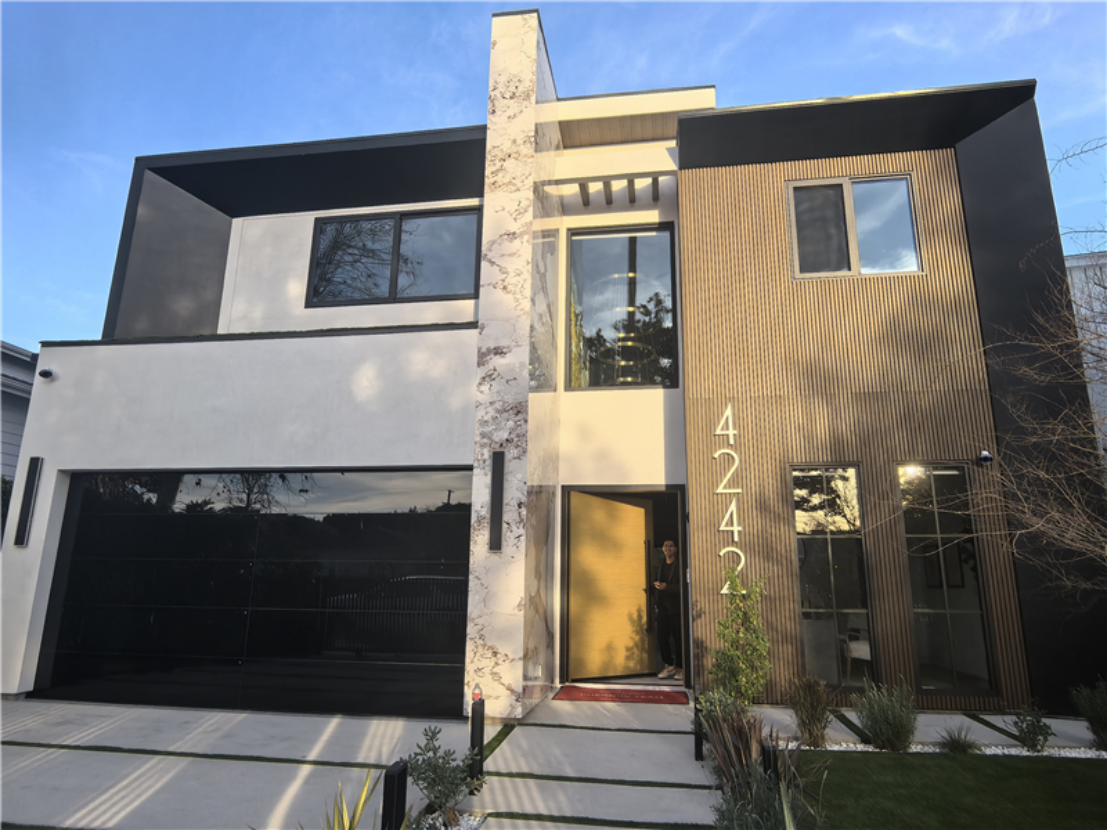
Los Angeles Villa Projects (4430 and 4242) — full-house door and window systems for high-end residential properties
Atlanta, Georgia — Villa Whole-House Custom Project — complete fenestration solution for a single-family villa
Georgia Sliding Door Project — targeted installation for a residential development
Residential Projects in Los Angeles — multiple documented deployments in the Southern California market
These are the types of engagements that matter most to North American contractors evaluating DERCHI as a supply partner: not just catalog presence, but demonstrated delivery capacity in U.S. project environments, with documentation that can inform procurement decisions.
U.S.-Relevant Certifications at a Glance
For procurement teams running compliance checklists, DERCHI's U.S.-facing certification profile covers the core bases:
NFRC (National Fenestration Rating Council) — the primary U.S. benchmark for window thermal, solar, and air performance; required for ENERGY STAR qualification and increasingly specified in both residential and commercial projects nationwide
ENERGY STAR — federally recognized energy efficiency certification; relevant to green building incentives and increasingly required in state energy codes
Miami-Dade NOA-aligned engineering — product architecture designed to meet the structural and impact requirements of the most stringent hurricane certification in the U.S.
ISO — quality management certification supporting supply chain compliance documentation for institutional and government-funded projects
This combination of energy performance credentials and hurricane-zone engineering alignment addresses the two dominant compliance pressures facing American builders today: tightening energy codes and mandatory wind-resistance standards in storm-prone regions.
From Orlando to Your Next Project: What DERCHI's Booth Proved
The choice to exhibit in Orlando — at the intersection of hurricane-code enforcement, villa construction activity, and a large contractor community — reflected a deliberate alignment between DERCHI's product strengths and the specific demands of the North American market.
For builders weighing aluminum window suppliers on the basis of longevity, code compliance, project-scale supply capacity, and total cost of ownership, DERCHI's Booth W4783 presentation made a structured and evidence-backed case. The growing demand for hurricane-impact windows across the Southeast and Gulf Coast, combined with tightening energy codes nationwide, is reshaping what "qualified supplier" means in practice. The conversation around aluminium window longevity and cost is ultimately a conversation about risk: risk of product failure, risk of code non-compliance, and risk of supply disruption. DERCHI's manufacturing depth, certification portfolio, and track record in comparable U.S. projects are all designed to reduce that risk.
More information on DERCHI's aluminum window lineup, project cases, and technical specifications is available at https://www.dejiypwindow.com.
What DERCHI Showcased at Booth W4783
Orlando was a deliberate venue choice. Florida is one of the most stringent building code environments in the country, where fenestration products face strict scrutiny for wind resistance, thermal performance, and water infiltration. By exhibiting here, DERCHI signaled its readiness for the North American market's toughest requirements — not just its most accessible ones.
The booth centered on DERCHI's aluminum window lineup, including its Casement Windows, Picture Windows, and Sliding Windows. Visitors could examine full-scale samples, review specification sheets, and discuss custom sizing and configuration options directly with technical staff. For builders managing villa developments, multi-unit residential communities, or mixed-use projects, the ability to evaluate a complete window system — frames, glazing, hardware, and sealing — in a single conversation proved a practical draw.
DERCHI holds certification from Xinhua News Agency as a "China Famous Brand" and operates a production base of 180,000 m² with an annual output exceeding 1,000,000 m². This scale is relevant to North American buyers because it directly addresses a common pain point: the gap between sample quality and production-at-scale consistency.
Hurricane-Impact Windows: Why U.S. Certification Standards Matter
For any builder operating in Florida, the Gulf Coast, or the broader Southeast, sourcing hurricane-impact windows is not a specification preference — it is a legal prerequisite. Understanding the U.S. hurricane certification framework is essential before any procurement decision, and it's a topic that dominated conversations at the Orlando booth.
The most rigorous standard in this space is the Miami-Dade Notice of Acceptance (NOA) — widely regarded as the most demanding hurricane safety certification in the United States. It is mandatory for windows installed in Florida's High-Velocity Hurricane Zones (HVHZ), requiring products to withstand extreme wind pressure and debris impact without failure. A window carrying Miami-Dade NOA approval has passed the toughest publicly enforced wind-load and impact-resistance protocol in the country — which is precisely why it functions as a credibility benchmark well beyond Florida's borders.
Closely related is the Florida Product Approval (FPA), which covers the broader state of Florida. Products that clear FPA can be legally sold and installed statewide, and the approval process requires demonstrated compliance with Florida Building Code performance thresholds. Together, Miami-Dade NOA and FPA represent the two gating requirements that define whether a window product is viable for storm-zone construction in the Southeast.
Underpinning both is ASTM E1886/E1996 — the standardized test methodology used to evaluate how building envelope components perform under windborne debris impact. These tests simulate large and small missile strikes against the window assembly, and results feed directly into NOA and FPA approval processes.
DERCHI's aluminium windows are engineered with these standards in mind. The company's Glass Self-Adaptive Adjustment System patent is specifically designed to distribute structural stress across the glazing assembly under high-load conditions — directly addressing the failure modes that ASTM missile impact tests are designed to expose. Combined with the Exclusive Four-Side Six-Point Lock invention patent (Patent No. ZL201610053534.X) and an NFRC-certified performance profile covering thermal, solar, and air infiltration metrics, DERCHI's product engineering maps closely to what U.S. compliance workflows require.
For project managers, the practical benefit is straightforward: hurricane-impact windows from a supplier whose product architecture reflects U.S. certification requirements move through permit and inspection stages with significantly less friction than uncertified alternatives. On large-scale residential or mixed-use developments, that difference in schedule velocity compounds quickly.
Aluminum Window Longevity: How DERCHI Backs Its Claims
The longevity question is one that every builder eventually faces from clients: how long will these windows actually last, and what happens when something goes wrong?
DERCHI's manufacturing process provides a measurable answer. Each product undergoes 168 distinct production processes and 38 rigorous inspection checkpoints before leaving the factory. The company has independently developed over 100 patents, reflecting sustained investment in both product innovation and manufacturing precision. An intelligent manufacturing system with 360-degree quality control monitors output at scale, which matters when a single project might require hundreds of identical units.
The company offers a ten-year warranty backed by double insurance coverage — a commitment that signals confidence in the durability of its materials and joinery. DERCHI's aluminum windows also carry the Three-Star Green Building Material certification, the highest tier in that classification, which reflects performance in both energy efficiency and environmental standards.
These aren't marketing numbers — they are the operational basis for the Reliable Aluminum Window performance that project specifications require. Builders sourcing for villa developments or multi-unit projects need windows that will not generate service callbacks two years in. Long-term performance data, backed by patents and certification trails, is what distinguishes a serious manufacturer from a commodity supplier.
Solving the Full-Project Supply Problem for North American Builders
One structural challenge that frequently complicates large residential developments in North America is fragmented sourcing. When doors, windows, and glazed partitions come from different vendors, lead time mismatches and specification inconsistencies create delays and installation errors.
DERCHI's positioning as a one-stop customized solution provider directly addresses this. The company's product range spans aluminum windows, aluminum doors (entry, bifold, sliding, swing configurations), sunrooms, and wooden doors — all manufactured within a single integrated facility. For villa-scale projects where the entire façade envelope needs to be coordinated, this means a single point of accountability for design, specification, production, and delivery.
As a recognized Global Leading Aluminium Windows Exporter, DERCHI has built distribution infrastructure specifically for this kind of project-level fulfillment, with established distribution points in the United States and Canada, among other regions. This matters for North American buyers because it reduces logistics complexity and provides clearer channels for technical support and warranty claims.
North America Project Track Record
DERCHI's engagement with the North American market is not theoretical. The company has completed 18,000+ projects globally, with products exported to over 30 countries across six continents. North America is a primary market, and the company's project portfolio includes multiple villa and residential developments across the United States.
Documented North American cases include:
Los Angeles Villa Projects (4430 and 4242) — full-house door and window systems for high-end residential properties
Atlanta, Georgia — Villa Whole-House Custom Project — complete fenestration solution for a single-family villa
Georgia Sliding Door Project — targeted installation for a residential development
Residential Projects in Los Angeles — multiple documented deployments in the Southern California market
These are the types of engagements that matter most to North American contractors evaluating DERCHI as a supply partner: not just catalog presence, but demonstrated delivery capacity in U.S. project environments, with documentation that can inform procurement decisions.
U.S.-Relevant Certifications at a Glance
For procurement teams running compliance checklists, DERCHI's U.S.-facing certification profile covers the core bases:
NFRC (National Fenestration Rating Council) — the primary U.S. benchmark for window thermal, solar, and air performance; required for ENERGY STAR qualification and increasingly specified in both residential and commercial projects nationwide
ENERGY STAR — federally recognized energy efficiency certification; relevant to green building incentives and increasingly required in state energy codes
Miami-Dade NOA-aligned engineering — product architecture designed to meet the structural and impact requirements of the most stringent hurricane certification in the U.S.
ISO — quality management certification supporting supply chain compliance documentation for institutional and government-funded projects
This combination of energy performance credentials and hurricane-zone engineering alignment addresses the two dominant compliance pressures facing American builders today: tightening energy codes and mandatory wind-resistance standards in storm-prone regions.
From Orlando to Your Next Project: What DERCHI's Booth Proved
The choice to exhibit in Orlando — at the intersection of hurricane-code enforcement, villa construction activity, and a large contractor community — reflected a deliberate alignment between DERCHI's product strengths and the specific demands of the North American market.
For builders weighing aluminum window suppliers on the basis of longevity, code compliance, project-scale supply capacity, and total cost of ownership, DERCHI's Booth W4783 presentation made a structured and evidence-backed case. The growing demand for hurricane-impact windows across the Southeast and Gulf Coast, combined with tightening energy codes nationwide, is reshaping what "qualified supplier" means in practice. The conversation around aluminium window longevity and cost is ultimately a conversation about risk: risk of product failure, risk of code non-compliance, and risk of supply disruption. DERCHI's manufacturing depth, certification portfolio, and track record in comparable U.S. projects are all designed to reduce that risk.
More information on DERCHI's aluminum window lineup, project cases, and technical specifications is available at https://www.dejiypwindow.com.
DERCHI
DERCHI
+86 158 7881 1461
doorsandwindows@dejiyp.com
Visit us on social media:
LinkedIn
Instagram
Facebook
YouTube
Legal Disclaimer:
EIN Presswire provides this news content "as is" without warranty of any kind. We do not accept any responsibility or liability for the accuracy, content, images, videos, licenses, completeness, legality, or reliability of the information contained in this article. If you have any complaints or copyright issues related to this article, kindly contact the author above.